


THE REASONS OF SOY PROCESSING
Soybeans are the most widespread oil crops in the World.
However, soy needs special processing before it being used in feed or food industries the reason are antinutrients.
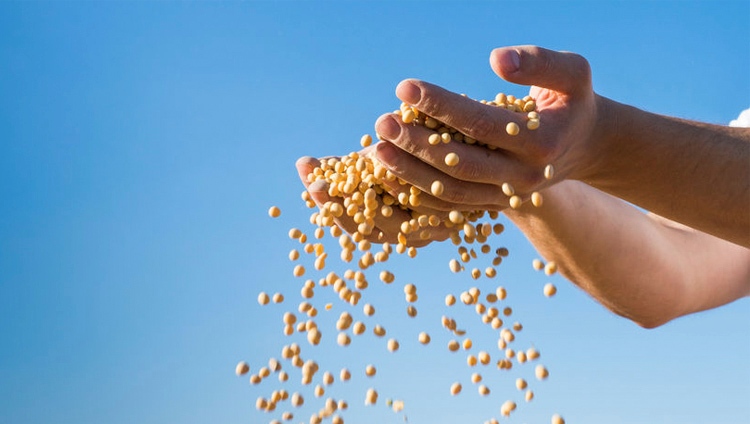
Soybeans are processed for the following technological tasks:
• inactivation of urease and trypsin inhibitor
• improving the digestibility of full fat soybean meal
• increasing the protein content in the press cake
• soybean oil production
To increase the protein content the soybeans are divided into husks (5-7%) and kernels (93-95%) with the help of the dehulling and milling machine. This step should be done prior to extrusion process.
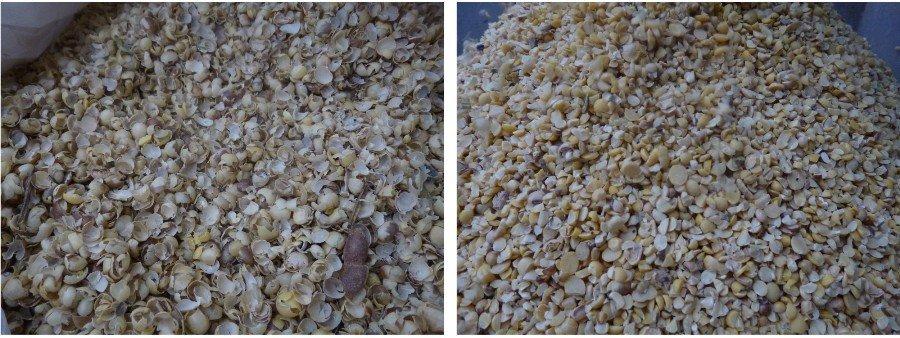
The urease level in soybean without any processing is 2-3 pH.Using the unprocessed product in food (or feed) will lead to pancreas malfunctions of human or animal.
Due to the high shear the product is compressed and mixed, the short term of cooking (up to 30 seconds), high temperature (120-150°C) and high pressure (up to 30 Atm) occurred inside the extruder barrel lead to the urease level decreasing to 0.05-0.2 pH.
After soybeans have been extruded you get a full fat meal which is suitable for use in food or feed industries, as result it has no harmful substances and contains:
• a high quality soy protein (35%)
• soybean oil (25%)
The extrusion process causes the rupture of fat cells walls; it’s easy to notice as the ready full fat soy is oily enough if you touch it. Actually there are different sides of the same coin.
On the one hand, this process enhances the availability of oil, de-activates the anti-nutritional factors such as trypsin inhibitors, lectins, urease, plus it’s much easier to press the oil from the full fat soy.
But on the other hand the open fat cell gets in direct contact with the oxygen of the atmosphere and as a result it is rapidly oxidized. So if the unprocessed soybeans can be stored up to 18 months the full fat soy meal is stored for 1 month only.
The subsequent processing of extruded full fat soy meal allows to:
• increase the shelf life of products and to reduce the rate of oxidation
• increase the protein content in the ready press cake (up to 40-43%)
• receive from 70 to 180 kg of oil from 1 ton of soybeans
After being discharged from the extruder the full fat soy temperature is 120-150°C and it releases the moisture in the vapor form. The extrudate is fed into the screw feeder and it’s moved into the oil press. Inside the feeder the product’s temperature is reduced to 90-110°C. The valve, built-in the feeder allows you to adjust the amount of steam in the product.
The full fat meal is fed to the oil press, it moved along the press cage being squeezed and pressed again. Under the pressure the oil seeps out through the press cage gaps and is gathered into the oil reservoir below.
Right after the soy oil has been pressed out you get the oil cake with the temperature to 100-120°C (and oil content of 7-8%). Soybean oil cake is rich in protein content which is 40-43%.
The press cake is fed into the cooler. The cooler's tumbler rotates and stirs it down to the discharge section. The fan creates a flow of air through the raw material. Heat exchange occurs between the cold air and the hot oil cake. The discharged oil cake temperature is 10-15 degrees higher than the temperature in the shop. The process of cooling takes place only 2-3 minutes.
Quick cooling protects against protein structure damage. After cooling the press cake can be stored for several months without any quality loss.
Here is the basic technological chain of soybean processing:
dehulling and milling machine - extruder - screw conveyor - oil press - cooler
If there are any questions, please do not hesitate to contact:
| +38 067 384 29 60 |
| +38 067 474 75 99 |
| +38 067 466 21 42 |
| +38 067 327 07 57 |
| e-mail: This email address is being protected from spambots. You need JavaScript enabled to view it. |